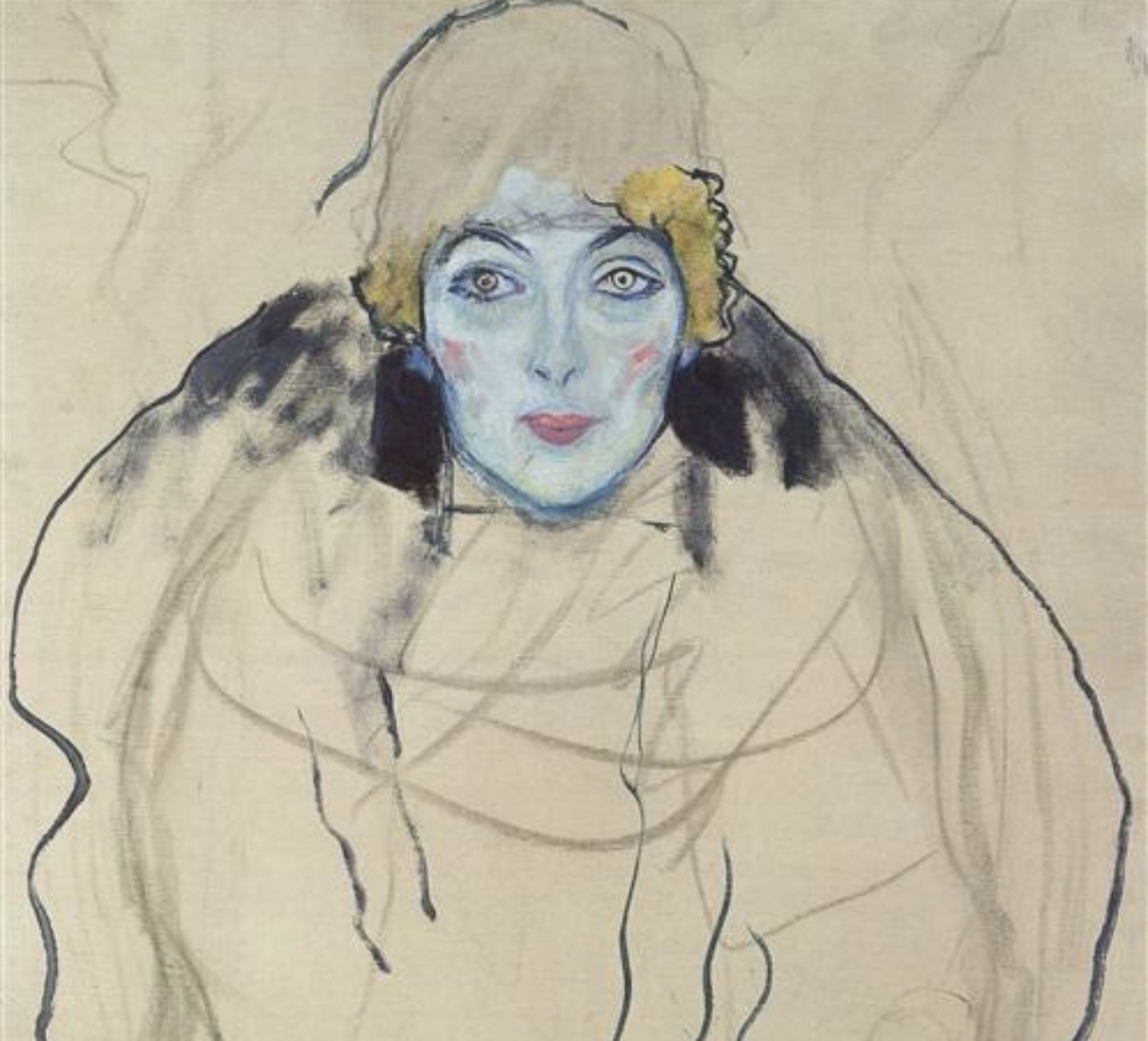
The Portrait of a Lady (unfinished), 1918, Gustav Klimt
One of the more annoying things about being young is how many people seem to know what you want before you do. You can spend years thinking about the kind of life you would like to have, explain it in reasonably clear sentences, and still be told that you have misunderstood yourself.
“You think that now.”
“You’ll understand when you’re older.”
“We know what’s best for you.”
Apparently, everyone has been having private conversations with my future self. I would appreciate being included.
If I could give one piece of advice to a young person, man or woman, it would be to develop enough understanding of yourself that other people’s confidence does not automatically become your doubt. Know what matters to you. Know what makes you happy, what you can compromise on, and what you might eventually resent yourself for accepting. You should be able to make a decision about your own life without needing someone else to certify that you are the sort of person who would want it.
“The greatest thing in the world is to know how to belong to oneself.” – Michel de Montaigne, Essays, “Of Solitude.”
This sounds fairly uncontroversial until the person disagreeing with you is someone you love.
It is easy enough to dismiss a stranger who thinks they understand your life from a few sentences on the internet. It becomes considerably harder when it is your parents. Or a close friend. Or the person you are in love with. People whose opinions matter to you, whose disappointment you would rather avoid, and whose love makes you feel that perhaps their certainty deserves more authority than your own.
Parents, especially, have a persuasive advantage. They knew us before we knew anything at all. They remember our childhood fears, our embarrassing phases, and the ambitions we announced with great conviction before abandoning them three weeks later. There is something deeply humbling about trying to establish yourself as a competent adult in front of people who remember having to remind you not to eat dirt.
But at some point, the person they raised develops thoughts they did not teach them. Values they may not share. Desires that do not fit the life they imagined while that person was still small enough to carry.
I imagine that is difficult to accept. You spend years being responsible for someone’s wellbeing, and then they start making decisions you cannot protect them from. Concern is understandable. So is fear. But neither makes a parent the final authority on who their adult child is allowed to become.
“Selfishness is not living as one wishes to live, it is asking others to live as one wishes to live.” – Oscar Wilde, The Soul of Man under Socialism.
Knowing where I came from does not mean knowing everywhere I might want to go.
The same problem exists in other relationships, although the language changes. A friend might insist that you are “not being yourself” when you do something they would not have expected. A partner might tell you that you do not really want the career, the move, the independence, or the life you have described. Sometimes what they mean is that this version of you makes their place in your life less comfortable.
Sometimes they are simply worried. People can misunderstand us with very good intentions.
That is part of what makes this complicated. We like to imagine that attempts to control us will arrive in an easily identifiable form, preferably accompanied by something sufficiently unpleasant that refusing becomes straightforward. Often they arrive through affection. Someone wants to spare you loneliness, disappointment, financial difficulty, or the particular regret that has followed them around for twenty years.
Their concern may be sincere. Their conclusion may still be wrong.
Of course, knowing yourself does not mean being incapable of self-deception. I can dress fear up as practicality. I can confuse wanting someone with wanting their approval. I can be so determined to prove that a decision is mine that I become embarrassingly unwilling to examine whether it is a good one.
People who love us can notice these things. I want people in my life who will ask difficult questions, point out contradictions, and tell me when I am being an idiot. Ideally with some affection, although I understand that circumstances may occasionally test their patience.
But there is a difference between someone helping me think and someone deciding that my own account of myself is inadmissible.
If you think I have overlooked something, tell me what it is. If you think I am taking a risk, explain the risk. Give me something to consider beyond the fact that you are older, related to me, or very confident. Those things may explain why I should listen to you. They do not settle whether I should agree.
And please do not introduce my future self as a witness who conveniently supports everything you already believe.
That is the argument I find particularly irritating. You explain what you want now, and someone produces an older, supposedly wiser version of you who wants the exact opposite. They will want children. They will wish she had married earlier. They will regret leaving home. They will realise that the ambition was excessive, the standards unreasonable, the independence overrated.
This imaginary person has remarkably conventional opinions.
Maybe I will change. I would be a little concerned if decades of living taught me absolutely nothing. Perhaps something I consider essential now will become less important. Perhaps I will want a life I cannot currently imagine wanting. I am willing to leave room for that possibility.
“Do I contradict myself? Very well then I contradict myself, (I am large, I contain multitudes.)” – Walt Whitman, “Song of Myself,” Leaves of Grass.
What I do not understand is why everyone else gets to use that possibility as evidence against me.
If nobody can know with certainty what I will want in twenty years, how does their prediction automatically outrank mine? I am at least acquainted with the person from whom this future woman is supposed to emerge. I know the thoughts I do not say aloud, the compromises that exhaust me, and the reasons behind decisions that may look strange from the outside.
Surely I get first dibs on predicting myself.
And even if I turn out to be wrong, I would like the mistake to be mine. I should be allowed to make a decision I might someday regret without having to surrender that decision to someone else now. Regret is a possibility in either case; following someone else’s advice does not spare us from it. But there is something particularly painful about living with the consequences of a choice you never wanted to make. If this is my life to live, surely I am allowed to get some of it wrong.
“To go wrong in one’s own way is better than to go right in someone else’s. – Fyodor Dostoevsky, Crime and Punishment, translated by Constance Garnett.
I hope I keep becoming someone I understand a little better. I hope the people who love me remain curious enough to keep getting to know her, rather than insisting that the version they remember is the only legitimate one.
And if my future self disagrees with me, we will argue it out once we get there.
Until then, I would rather people stopped speaking on her behalf.
Leave a Reply