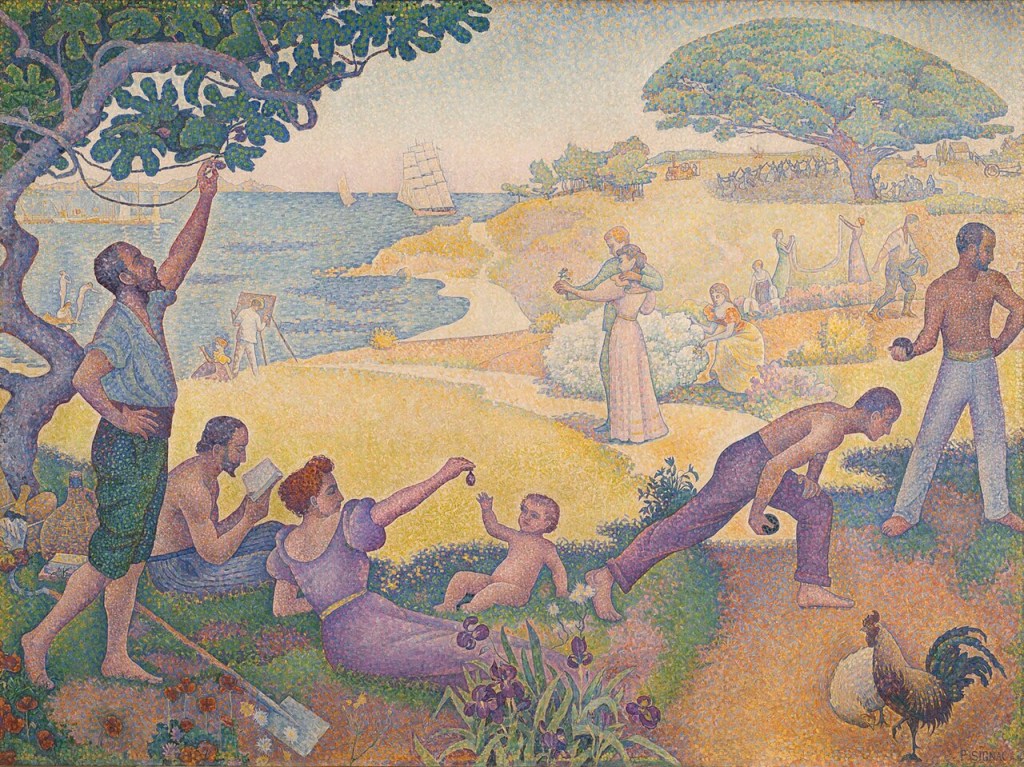
In the Time of Harmony, Paul Signac, 1895.
On one of my doom-scrolling days, I came across a clip from some very generic alpha-bro podcast where one guy said something along the lines of, “Feminist women on their deathbeds will have nothing other than cats and their friends, and will never feel the joy and fulfillment of being surrounded by their children and grandchildren, i.e. family that means something.”
Now, ignoring the obvious low-intelligence commentary implying that women should take on the burden of children even if they don’t want them or aren’t ready for them, and that pets and friends apparently don’t count as meaningful relationships, I want to focus on the very western, hyper-individualistic view of family he portrayed.
It made me think about how, if I, an only child, were to die after my parents, with no husband or children, the number of people at my funeral would probably exceed the attendance at an average “big” western wedding. Some might be there out of obligation, sure. But many would still be there out of genuine love for me and grief at losing me.
My life would not suddenly become empty because I hadn’t produced offsprings.
That made me think about how, in a lot of Western conversations, “family” usually means your spouse and children. Parents and siblings might make it into the extended category, but rarely does the conversation reach much further. Meanwhile, in cultures like mine, I can be invited to the wedding of my mother’s paternal cousin’s wife’s sister. And yes, I went, because that was still a “close relation.”
I often see Western couples complain about finding childcare when they need a night out, while I remember staying, sometimes overnight, with relatives or even trusted neighbours whenever my parents needed to go somewhere. I see social media debates about whether asking to crash at a friend’s place is rude because saying no would make them “uncomfortable,” when I have stayed at a friend’s home while they weren’t even there. How plans for going to a loved one’s birthday party can be easily dismissed cause you’re not “mentally there”.
And somewhere along the way, “I don’t owe anyone anything” has become an entire philosophy of life.
Of course you don’t owe everyone unrestricted access to your time, home or emotional energy. But if your response to every request, inconvenience or expectation is that you don’t owe anybody anything, what kind of community do you expect to have? You cannot expect people to show up for you while treating every occasion to show up for them as an infringement on your freedom.
Sometimes caring about people means being inconvenienced. Sometimes it means answering a call when you weren’t planning to talk, helping someone move, or making room for a friend who is having a difficult week. These things require consideration, but the fact that they require something from you does not automatically make them unreasonable.
Friendships deserve more consideration than we give them. They cannot always survive on leftover time, cancelled plans and the assumption that a good friend will understand being indefinitely postponed.
We get through cycles of, “I don’t want to bother anyone with my problems.” You are a human being. You should bother people, you should want to be bothered by people. Following the words of something Simon Sinek once said, as a friend, how dare you deny me the opportunity to sit with you in your mud? How dare you to deny me the honor of being there for you, of being your friend?
“What do we live for, if it is not to make life less difficult to each other?” – George Eliot, Middlemarch
“I don’t need anyone” has a similar problem. Being able to take care of yourself is useful. Turning that ability into a moral achievement, where needing other people becomes embarrassing or weak, is something else entirely. Most of us will eventually be ill, grieving, overwhelmed, old, or simply having a terrible Tuesday.
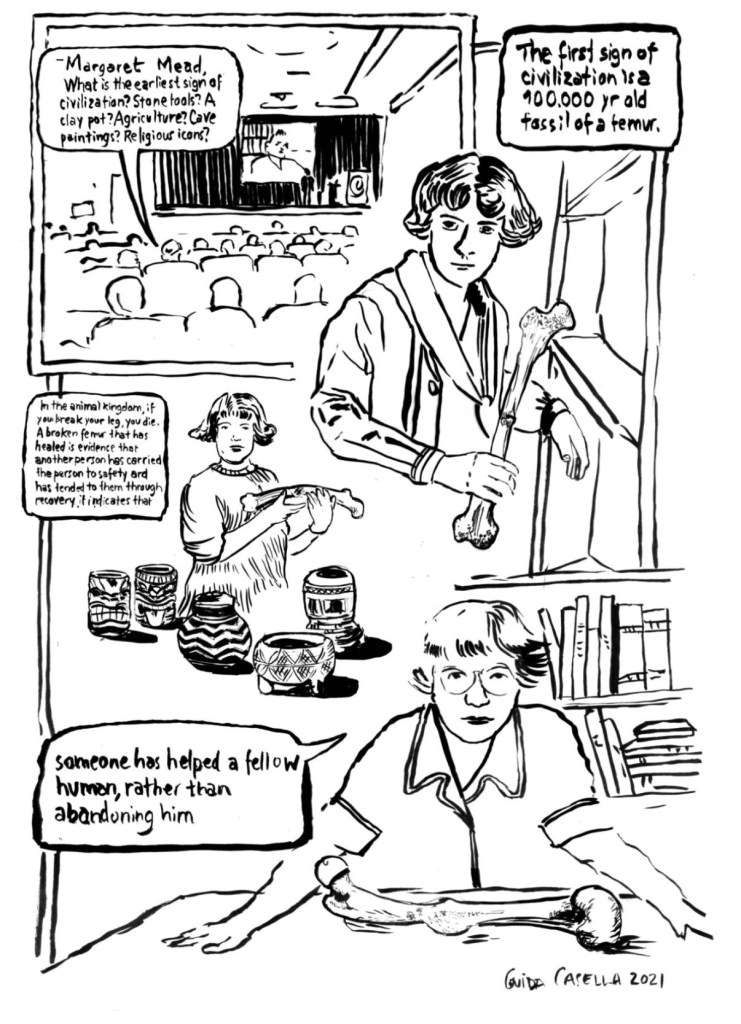
Independence does not exempt anyone from being human. You can be an introvert who likes to be left alone; nobody is asking you to host a dinner party every evening. But your personal preference for solitude does not overturn the evidence that human connection matters. Humans evolved as social beings, and research has long linked loneliness and social isolation to things like depression, drug abuse, heart disease and even cancer. Enjoying your own company is perfectly fine. Turning that preference into an argument that we do not need one another is a much bigger claim, and “I’m an introvert” is not enough to support it.
And strangely, this insistence on needing nobody often comes with an exception: your romantic partner.
We shrink our support systems and then expect one person to be our best friend, confidant, family, emotional support and entire social world. We rank our relationships in the name of “prioritising,” as though admitting that friendship has its own importance somehow takes something away from a marriage.
Obviously, different relationships come with different responsibilities. But your spouse, parents, children and friends each have a place in your life. They do not all need to compete for a position on a leaderboard. A friend should not have to become practically irrelevant because someone has found a partner.
There is also a danger in making one person your entire world. When a relationship becomes controlling or abusive, having people outside it matters. It matters that someone notices you have stopped coming around, that you have somewhere to stay, and that someone can remind you that what is happening is not normal. When your spouse becomes your only meaningful relationship, leaving can mean losing almost your whole support system at once.
With what might seem like my overwhelming optimism for collectivist societies that can rightfully be called biased, I am not saying societies like ours are without glaring problems. A lot of our villages and communities are built on the backs of women’s unpaid labour. While the rest of us sat around chatting as a family, someone, usually women had to cook, serve and clean. Women were often the ones expected to maintain contact with relatives, remember occasions and keep the whole thing functioning.
There are also serious safety concerns, especially for girls, and a boundary problem that cannot be brushed aside in the name of family.
But I would still choose a collectivist society that addresses these problems: one where men do their equitable share of maintaining the village, children’s safety takes precedence over relatives’ feelings, and boundaries are established and respected.
“Protecting your peace” makes sense when it means refusing mistreatment. It starts going too far when every disagreement becomes toxicity, every request becomes emotional labour, and every uncomfortable conversation becomes a reason to cut someone off. Relationships need room for ordinary friction, apologies and repair.
Being an introvert who likes to be left alone is perfectly fine. Building an entire social philosophy around never having to accommodate another person is a different matter. The need for human connection does not disappear because we have found more appealing language for isolation.
With a rise in social media, automation and AI, it is becoming easier to get through a day without interacting with anyone. Or the unhealthy desire to showcase your life to an audience instead of people you love. Wanting a text before a call or preferring self-checkout is not, by itself, a social crisis. But the growing addictive need for isolating circumstances needs thought. These preferences do not all arise in a vacuum. Not wanting to interact with your Uber driver might have an undertone of racism given the over representation of certain ethnicities in the profession or maybe having to behave kindly to service workers feel so hard because of unchecked classism. Considering yourself as the main character to the point that your friends and family become your followers you judge on the basis of how they interact with your “content” rather than real life, is scary.
There is a political dimension to this, too. People who trust, depend on and organise with one another can look after each other and push back together. A society in which everyone sees everyone else as a burden, a competitor or someone else’s problem makes that harder. A rise in selfishness and a lack of empathy are what drive dictatorial empires. The noticeable marginalisation of groups, intense misogyny, bigotry, racism or even animal cruelty on social media are part of the butterfly effect of the slow loss of community. Community does not automatically prevent these hateful rhetorics and sometimes communities may also be built around hatred for particular groups; ours certainly proves that.
What we need is to raise children and build spaces where kindness is practised beyond the boundaries of family, faith and species. Where helping a stranger, protecting an animal and standing beside someone being persecuted are ordinary responsibilities we learn from one another.
I want the village. I just want the women in it to be able to sit down and enjoy the conversation too. I want children to be safe, boundaries to be respected, and friendships to count as relationships worth maintaining.
And when I think about who might surround me at the end of my life, I hope there will be people whose love I have earned by loving them, showing up for them and making space for them while I could. Some may be relatives. Some may be friends. There might even be a cat.


Leave a Reply