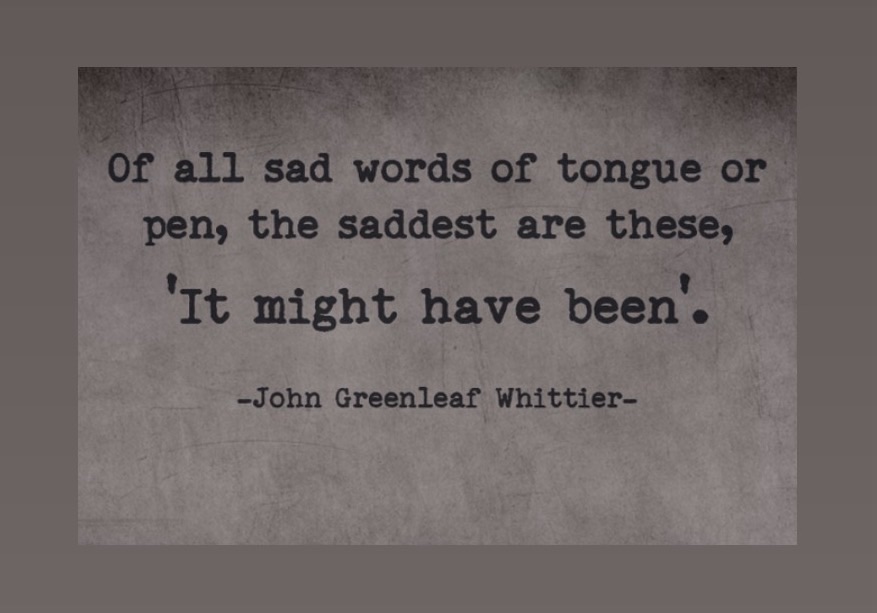
Profoundness isn’t always found in classic literature, philosophy, or music, as some snobs might probably like to allude. Some of the most profound things I’ve read were actually buried in random comment sections, written by ordinary people in utterly ordinary contexts. Maybe they strike me more deeply because of the non-performativeness of their nature. Thoughts written without any underlying intention to sound profound, which, ironically somehow makes them more so.
So when I came across this comment under a TikTok post,
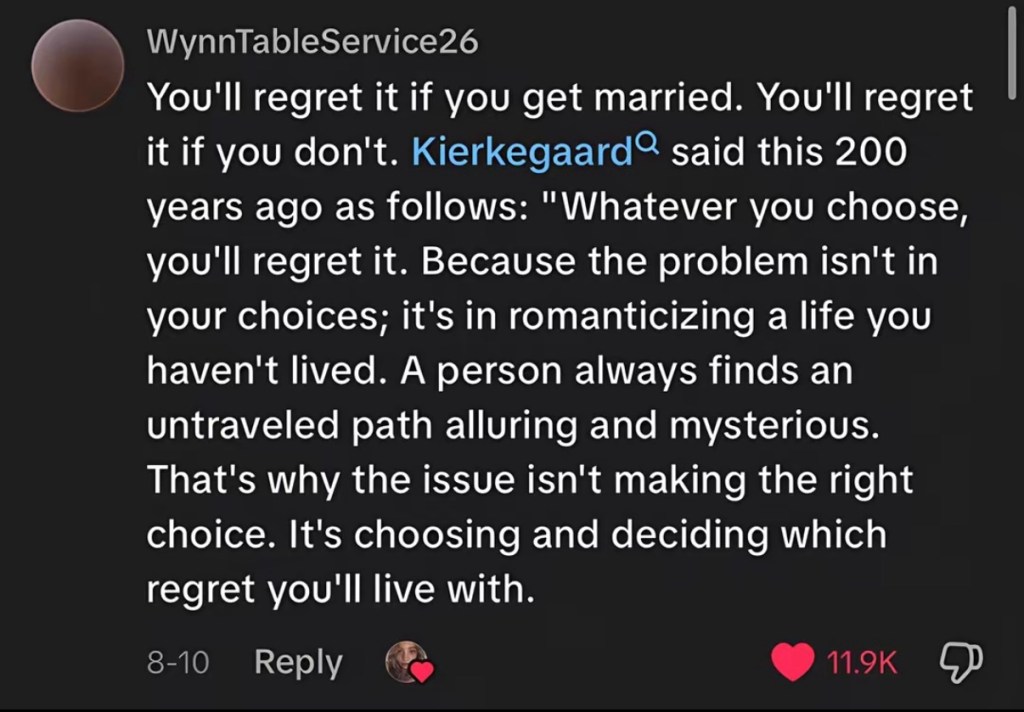
about the lifelong dilemma between singleness and marriage, strangely it took me back to the first time I read about the many-worlds interpretation in physics. It is very humanly weird how something so apparently mundane could lead someone back to something that complex. I suppose that is one of the curious parts of human nature, we like to look for some humanity even in the most complicated of ideas.
I will tread with some caution here first though, because I am, very much, not a physicist, so please don’t come at me if you are better read on this than I am. My entire understanding of the many-worlds interpretation comes mostly from the hazy memory of reading some random science book when I was fourteen, followed by years of occasionally falling down internet rabbit holes about it. But as I understood it, at the quantum level, all possible outcomes of a quantum event are physically realized in separate, parallel realities until they are measured. Schrödinger’s famously unfortunate cat is a classic example: if the cat’s fate depends on a quantum event, the system can be described as containing both possibilities, the cat alive and the cat dead. The many-worlds interpretation takes this somewhere even stranger. Instead of one possibility becoming real while the other simply disappears, both outcomes continue, only in separate branches of reality: in one, the cat lives, in another, it dies.
And maybe that is why the idea came back to me while reading that comment. Every decision we make leaves behind another possibility, and we seem almost incapable of not thinking about it. We choose one life, yet continue to wonder about the one that might have existed had we chosen differently, as if somewhere, in some parallel reality, that other life is still unfolding without us.
The unsettling part for us, I think, is that we do this even when we know perfectly well that the other life exists only in our imagination. We are remarkably good at constructing entire realities out of choices we did not make. And the bigger the choice, the more elaborate that parallel life becomes.
The strange thing about imagining all these parallel versions of our lives is that it assumes there was ever a moment when we stood completely free between them. As if life presents us with two doors, gives us enough time and information to inspect both, and then simply asks which one we would prefer. Real life choices rarely look like that. By the time we arrive at most of the decisions that would alter the course of our lives, there are already a hundred invisible hands resting on the scale. There is the family we were born into, the culture that taught us what a “good” life is supposed to look like, money, geography, responsibility, fear, timing, the people who depend on us, the people we are afraid to disappoint, and the particular circumstances we happened to inherit rather than choose. Then there are the quieter forces: the desire to belong, the fear of being left behind, the suspicion that everyone else somehow received a clearer set of instructions for living. And buried somewhere beneath all of that is the deceptively simple question and often the most neglected one: What would actually make me happy?
Maybe that is why the idea of the road not taken has always felt a little incomplete to me. There is rarely just one road not taken. There are entire networks of them. A life is made from thousands of small closures, but some decisions are large enough that we can almost see the person we might have been standing on either side of them. Choose certainty or risk it for possibility. Stay back at the comfort of your hometown, your family, your friends or make the choice to pack your life into two 23 kg luggages and start somewhere else. Live in familiarity and the comfort and mundaneness of your life now or choose the discomfort that comes with ambition. Choose the person you love or the life you imagined before you loved them. Have children or don’t. Marry or remain single. Settle down with your realism glasses on or risk loneliness searching for your perfect fit. Put yourself first or fulfill a responsibility that matters just as deeply to you. These are difficult precisely because the alternatives are often not as binary good and bad. That would make human lives too easy. And where’s the fun in that? Sometimes they are two goods that cannot coexist. Sometimes they are two losses and we are merely deciding which one our soul can bear. Sometimes what will make us happy now may cost the person we become later, and what that future person needs may require the present version of us to give something up.
So, how exactly is anyone supposed to identify the “right” choice?
Is there even such a thing as the right choice?
I am beginning to think that one of the cruellest expectations we place on ourselves is that somewhere inside every difficult decision there is a correct answer waiting to be discovered, and that if we are sufficiently intelligent, sufficiently self-aware, sufficiently careful, we will find it. That is not to say there are scenarios in life where the distinction between right and wrong is very obvious, and only if we are capable to take of our glasses clouded with the rosy haze of this pesky thing called emotions, we could make the evidently better choice. But, as I said before, a lot if not most decisions in life are rarely that black and white.
We treat our lives like examinations in which the answer already exists and our job is simply not to get it wrong. So we make lists. We ask friends. We ask our parents. We ask strangers on the internet. We pray. We calculate risks and imagine consequences and search desperately for signs. We wait for that mythical moment of certainty when everything inside us will become quiet and one path will announce itself as the obvious one.
But perhaps some decisions feel impossible precisely because there is no hidden correct answer. There are only choices, and then there are the lives that grow around them. We tend to judge our decisions backwards: if the life that follows is happy, we call the decision right; if it becomes painful, we wonder whether we chose wrong. But even a good choice does not guarantee a good life. You can choose someone you love and still lose them, leave home for the life you wanted and discover that ambition is lonelier than you imagined, or stay and build something beautiful while still wondering who you might have become elsewhere. We simply do not have the luxury of being everything we want.
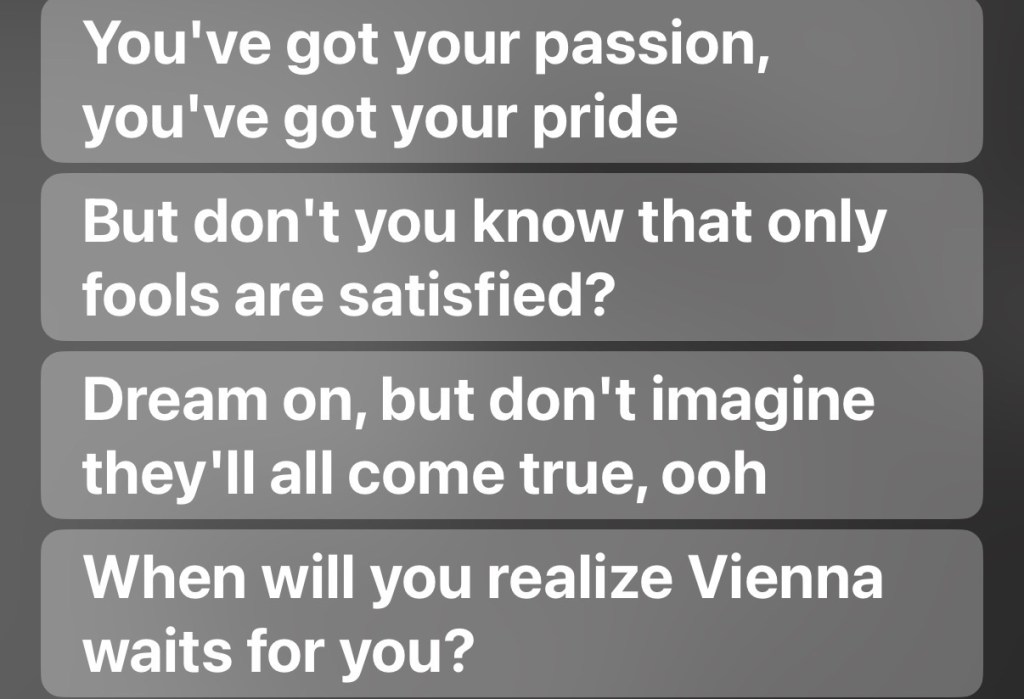
Perhaps regret, then, is not necessarily evidence that we chose incorrectly, sometimes it is simply the cost of choosing at all.
“Regret is the privilege of having a choice.”
Every meaningful choice contains a small grief for whatever it excludes, and loving the life we have does not make us incapable of mourning, however briefly, the one we could have had.
To even be able to say “I should have chosen differently” first requires that differently was available to you. There had to be another door you were actually capable of opening. For many people, circumstance makes enormous parts of their lives non-negotiable. Money chooses. Family chooses. Citizenship chooses. Illness chooses. Duty chooses. Sometimes survival chooses. There is no parallel life to romanticize because there was never a genuine fork in the road. So perhaps the peculiar agony of wondering what might have been is, at least sometimes, the price we pay for having possessed enough freedom to wonder what should be.
But choice gives us freedom without giving us foresight, which feels almost cruel when you think about it. We are asked to make decisions capable of changing decades of our lives while knowing only the person we are today. I can choose for my hypothetical thirty-year-old self, but I cannot interview my fifty-year-old self beforehand. I cannot know which sacrifice she will consider worthwhile, which thing she will wish I had protected, or which loss she will eventually forgive me for. The person making the decision and the person who will live longest with its consequences are, in some sense, not even quite the same person. Yet years later we look backward with information our younger selves never possessed and put them on trial for not having known it.
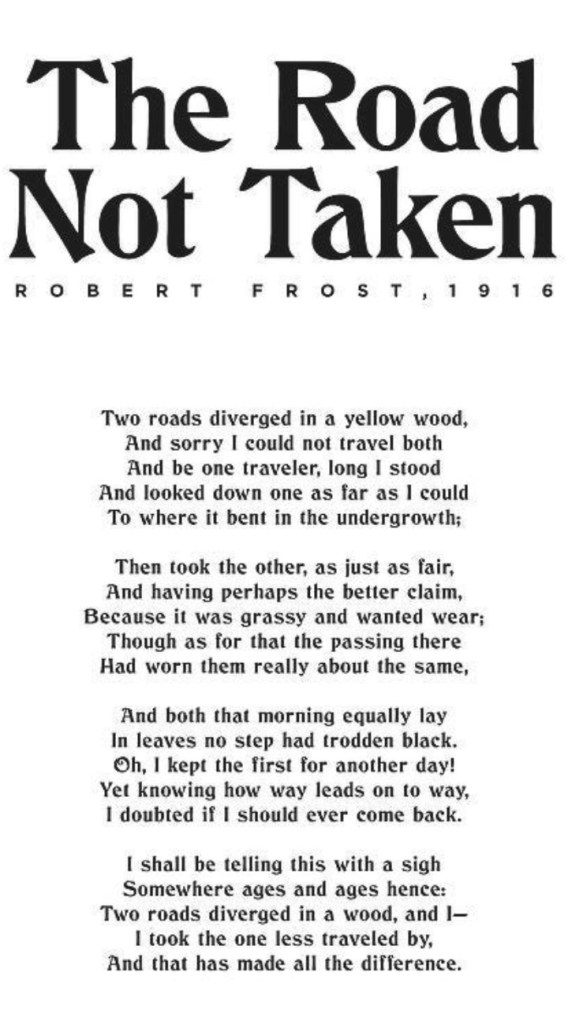
Worse still, the two possible lives are never judged fairly. The life we choose has to become real. It acquires bills and boredom, arguments and compromises, ordinary Tuesdays, disappointments, missed opportunities, and all the small indignities that imagination conveniently leaves out. The life we did not choose is spared all of this. It remains suspended at the point of possibility, untouched by consequence. We can take everything beautiful that might have happened there and quietly omit everything that might have broken our hearts. Of course the parallel life sometimes looks better. We have given it the privilege of remaining hypothetical.
So I wonder whether regret necessarily tells us anything about the correctness of a decision at all. Maybe it only tells us that something valuable existed on the other side of it. Missing freedom does not necessarily mean choosing love was a mistake; missing intimacy does not mean choosing independence was one. Longing for home does not prove leaving was wrong, just as wondering who you might have become elsewhere does not prove staying was. A choice can give us something extraordinary and still require us to mourn what it cost.
And after all of this, I keep arriving at a question that is much less satisfying than an answer: is there even such a thing as the correct choice? Maybe we desperately want there to be because a correct choice would mean there is a version of life without the haunting, some perfect branch where we selected wisely enough that we never again looked sideways at another possibility. But perhaps no such universe exists. Perhaps in the parallel life we spend so much time romanticizing, that other version of us is doing exactly the same thing: living with everything her choice gave her, occasionally grieving everything it took away, and wondering about us.
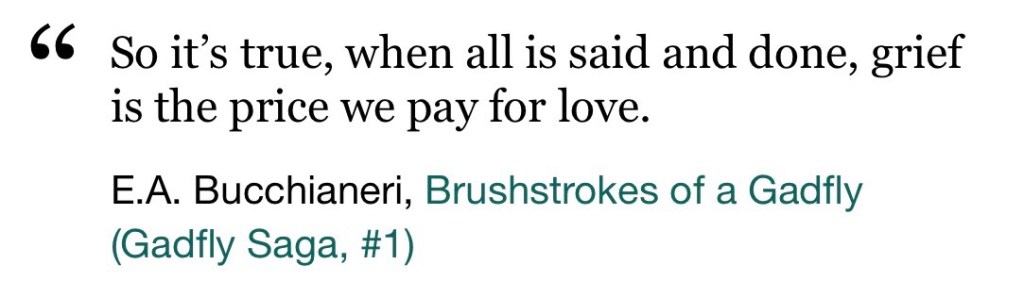
And even the grief we feel, is something to not be trivialized, because after all,
 thebrownjomarch
Leave a comment